Blog #12: Healthy Kids and News Flash!
News Releases from Headquarters›Chief Financial Officer (OCFO)
Proposed EPA program would give $50-million boost to children’s health
WASHINGTON (March 18, 2019) — The U.S. Environmental Protection Agency (EPA) is proposing a new $50-million grant program, the Healthy Schools Grant Program, to expand the Trump Administration’s efforts to protect children where they learn and play. The announcement is part of President Trump’s proposed Fiscal Year 2020 budget and supports EPA’s ongoing commitment to evaluate and address risks to children’s health.
“Protecting children's health is a top priority for EPA, and this new funding would help schools address poor and deteriorating conditions that can harm children’s health and stymie academic progress,” said EPA Administrator Andrew Wheeler. “This grant program would help schools, especially those in underserved communities, reduce exposures to environmental hazards, create healthier learning environments, and ensure children can reach their fullest potential.”
“Children tend to be at greater risk from environmental hazards than adults because of their greater exposure relative to their body mass and because their developing organs make them more susceptible,” said Dr. Michael Firestone, acting director for EPA’s Office of Children's Health Protection. “This new grant program is aimed at reducing those risks where children spend most of their time learning and playing.”
The Healthy Schools Grant Program is a comprehensive environmental health grant program with the goal of identifying and addressing environmental health risks in and around schools that contribute to increased absenteeism and reduced academic performance. The program would provide a total of $50 million for schools to identify, prevent, reduce and resolve environmental hazards including:
- reducing childhood lead exposure;
- reducing asthma triggers;
- promoting integrated pest management; and
- reducing or eliminating childhood exposure to one or more toxic chemicals in schools.
Eligible recipients would include state and local governments, federally recognized tribal governments, and non-profit organizations.
Nearly 50 million children attend more than 100,000 K-12 schools every day. Reducing exposures to environmental hazards in schools creates healthier learning environments, which enables children to perform better in the classroom and thereby improve their academic performance and expand their opportunities later in life.
The Healthy Schools Grant Program would also support the Federal Action Plan to Reduce Childhood Lead Exposures and Associated Health Impacts (Lead Action Plan), which was unveiled in December by EPA and 16 other federal departments and offices. The Lead Action Plan was developed by the President’s Task Force on Environmental Health Risks and Safety Risks to Children as a blueprint for reducing lead exposure and associated harms by working with states, tribes and local communities, along with businesses, property owners and parents.

Parents for health Schools also talks about the importance of quality nutrition, health drinking water and more physical activity for kids.
To learn more about what EPA is doing to promote healthy schools, visit www.epa.gov/schools, and to learn about all of EPA’s Children’s Health programs, visit www.epa.gov/children.
We also need to keep up with Lead prevention activities and risk in our school districts. Here in San Diego we have a vibrant and aggressive lead campaign. This program is run via the County of SD in partnership with Family Health Centers of San Diego. They keep up with testing water in the SD unified school district, testing children, education parents, teachers and health providers.
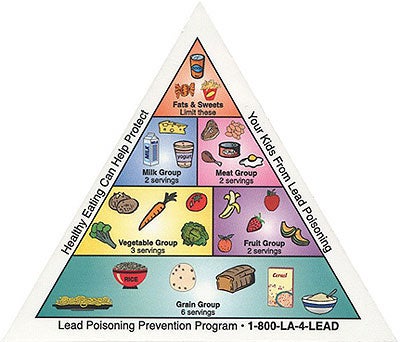 |
| Well fed=blocks lead! |
Lead is a persistent problem! Understanding the acute and chronic effects on children is important for all nurses.
We also need to advocate for healthier low VOC paints, furniture and cleaning chemicals in our schools!
 Supporting School nurses and the CA School Nursing Association is a great way to get behind this campaign to reduce air pollutants in our schools.
We also need to advocate for healthier low VOC paints, furniture and cleaning chemicals in our schools!


Reading this actually excites me! Lead is very prevalent in the San Joaquin Valley where I live. The are many old communities that have old homes with old paint. There are also old, poor neighborhoods that look abandoned yet children still attend school there. Their parents also live in the poor housing as they are unable to afford anything else. Perhaps some of that money could trickle down to the Valley.
ReplyDelete